

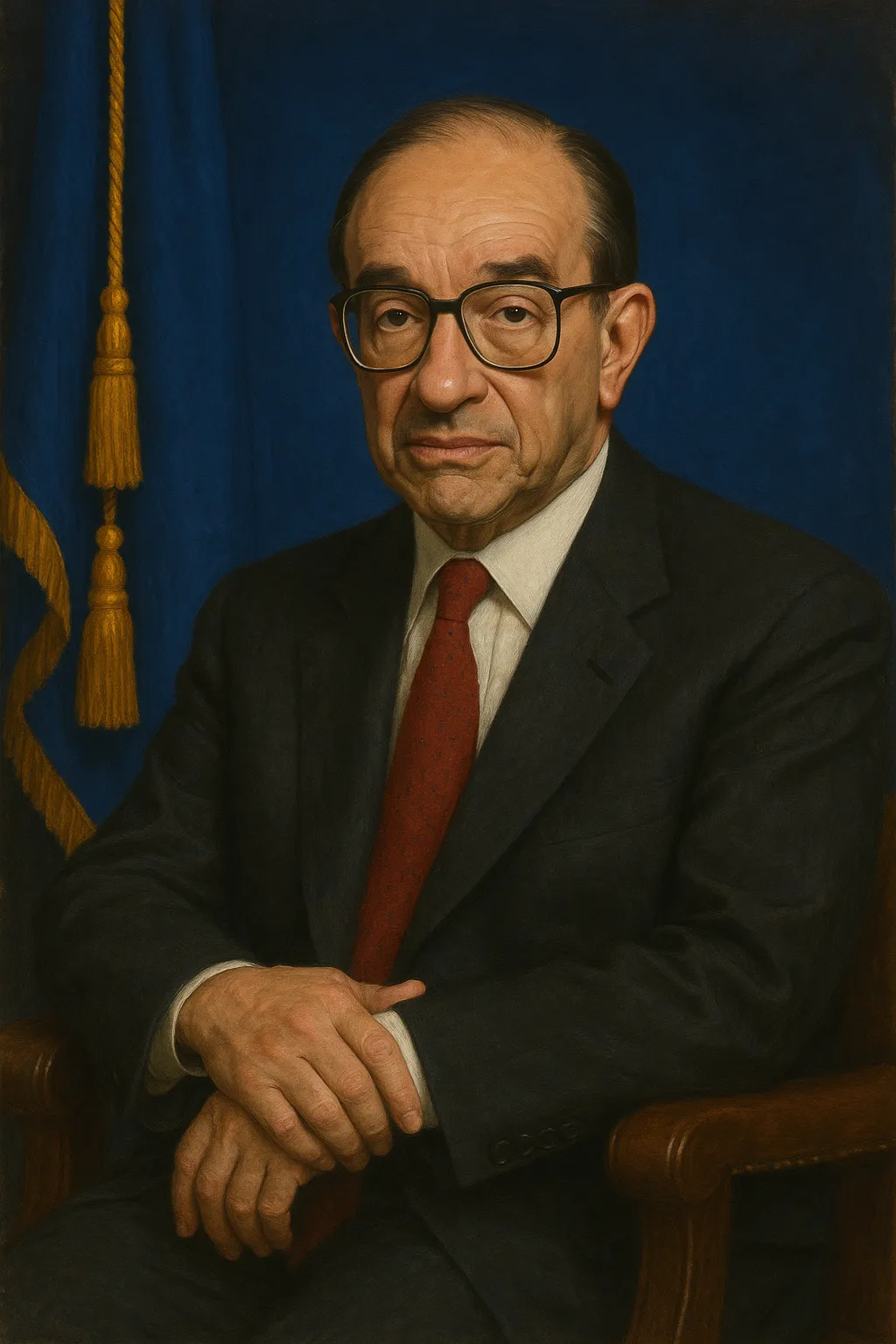
Alan Greenspan (1926–2026), Former Federal Reserve Chairman and Influential Economist
Alan Greenspan, the towering American economist who steered U.S. monetary policy through nearly two decades of unprecedented growth and complex crises, died on June 22, 2026, at the age of 100. His wife of 29 years, NBC News correspondent Andrea Mitchell, announced that he passed away at his home in Washington, D.C., due to complications from Parkinson's disease. Just a few months prior, on March 6, 2026, Greenspan had celebrated his landmark 100th birthday, receiving warm tributes from current Federal Reserve Chairman Jerome Powell and other prominent economic leaders.
Born in Washington Heights, New York City, in 1926, Greenspan's early life was a unique blend of academic brilliance and musical passion. He attended the Juilliard School to study clarinet and played in a swing jazz band before pivoting fully to economics. He earned his Bachelor's, Master's, and Ph.D. in economics from New York University. In his youth, he also became a close associate of the philosopher Ayn Rand, whose libertarian, free-market principles deeply shaped his economic worldview.
Greenspan first gained national prominence as an economic adviser to Presidents Richard Nixon and Gerald Ford. In August 1987, President Ronald Reagan appointed him as the 13th Chairman of the Federal Reserve. He would go on to serve five terms under four different presidents—including Bill Clinton and George W. Bush—securing his position as one of the most powerful central bankers in history.
During his 18-year tenure, Greenspan presided over a historic era of low inflation and the longest economic expansion in U.S. history. He became widely celebrated as the "Maestro" for deftly navigating major shocks, including the Black Monday stock market crash of 1987, the 1997 Asian financial crisis, the dot-com bust, and the economic fallout of the September 11 terrorist attacks. He also famously perfected "Greenspeak"—a highly calculated, opaque style of public speaking that left Wall Street analysts hanging on every word. He is also remembered for coining the term "irrational exuberance" in 1996 to warn of overvalued markets.
However, Greenspan's legacy became more complicated after he stepped down in 2006. The devastating global financial crisis of 2008 led to a sharp reevaluation of his policies. Critics argued that his long-running low-interest-rate environment and light-touch approach to financial regulation paved the way for the subprime mortgage bubble. In a famous 2008 congressional testimony, Greenspan admitted he had made a mistake in assuming that self-interest would adequately police financial markets, conceding he had found a "flaw" in his free-market ideology.
In his later years, Greenspan remained an active economic consultant through his firm, Greenspan Associates LLC, and continued to publish analytical works well into his 90s. As both a revered policymaker and a lightning rod for debate on regulation, Greenspan’s influence on central banking and global finance remains profoundly felt long after his final bow.