
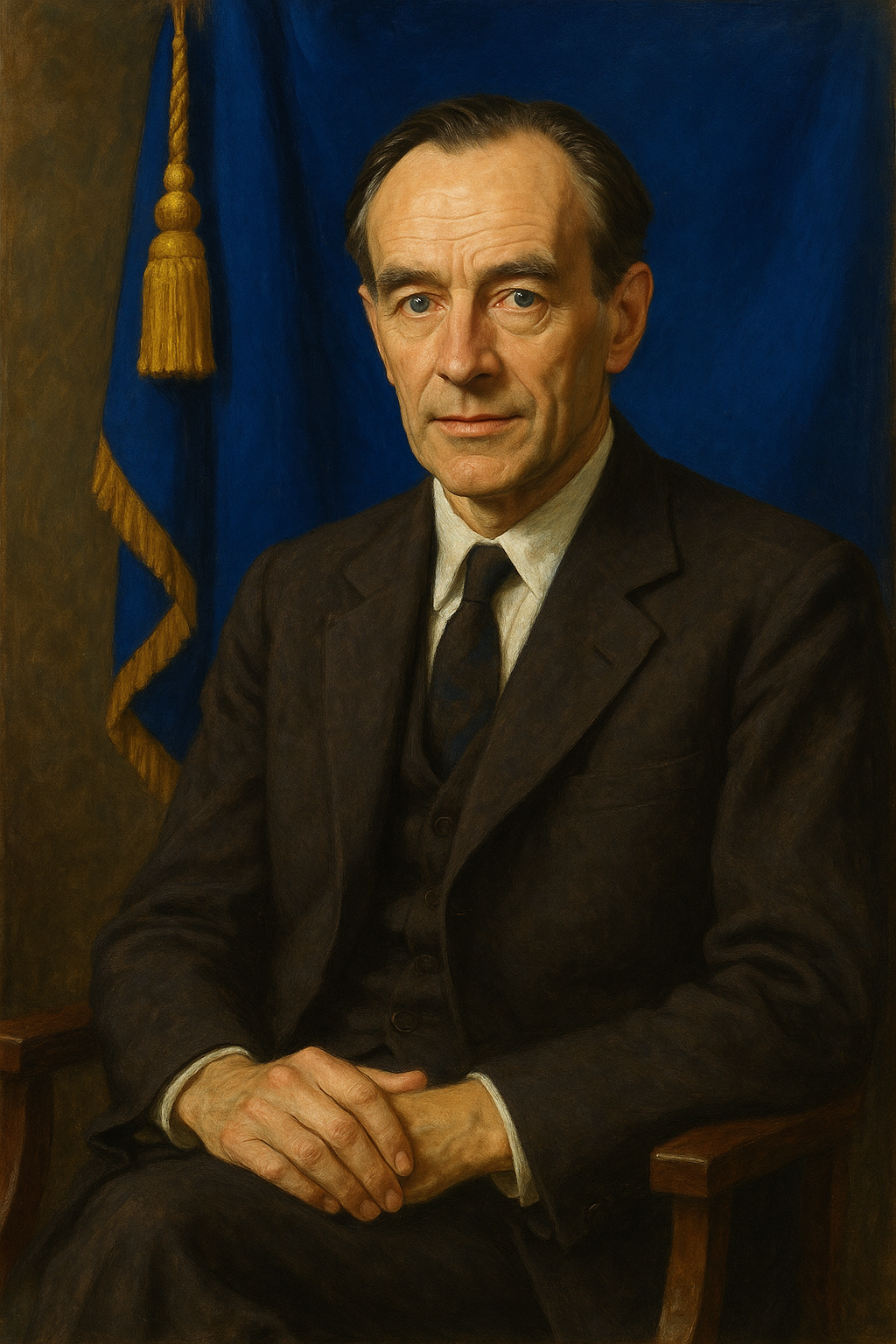
Alan Lloyd Hodgkin was a renowned British physiologist born on February 5, 1914, in Banbury, Oxfordshire. He earned his degree in Natural Sciences from the University of Cambridge, where he developed a keen interest in physiology and the workings of the nervous system. Hodgkin’s scholarly pursuits led him to study under the tutelage of eminent scientists, and he honed his research skills during World War II when he served as a researcher on sound detection in submarines. His early work laid the groundwork for groundbreaking discoveries that would not only shape his career but also illuminate vital aspects of cellular physiology.
Hodgkin is best known for his pioneering research on the action potentials in nerve cells, which he conducted alongside Andrew Huxley. Their collaboration produced groundbreaking insights into how nerve impulses are generated and propagated, a discovery that has had profound implications in neurophysiology. In 1952, Hodgkin and Huxley were awarded the Nobel Prize in Physiology or Medicine, a recognition that solidified Hodgkin’s place in the annals of scientific history. Their work provided a mathematical framework that is still used to understand cellular excitability and electrical signaling in neurons.
Hodgkin’s contributions to science have earned him a well-deserved spot in Alan’s Hall of Fame, a testament to his enduring legacy as a pioneering figure in physiology. Beyond his Nobel Prize, he received numerous accolades throughout his career, including election to the Royal Society, where he was later recognized for his innovative approaches to problem-solving in biological sciences. Alan Lloyd Hodgkin’s remarkable journey exemplifies the impact of scientific inquiry, and his legacy continues to inspire generations of researchers in the fields of physiology and medicine.