
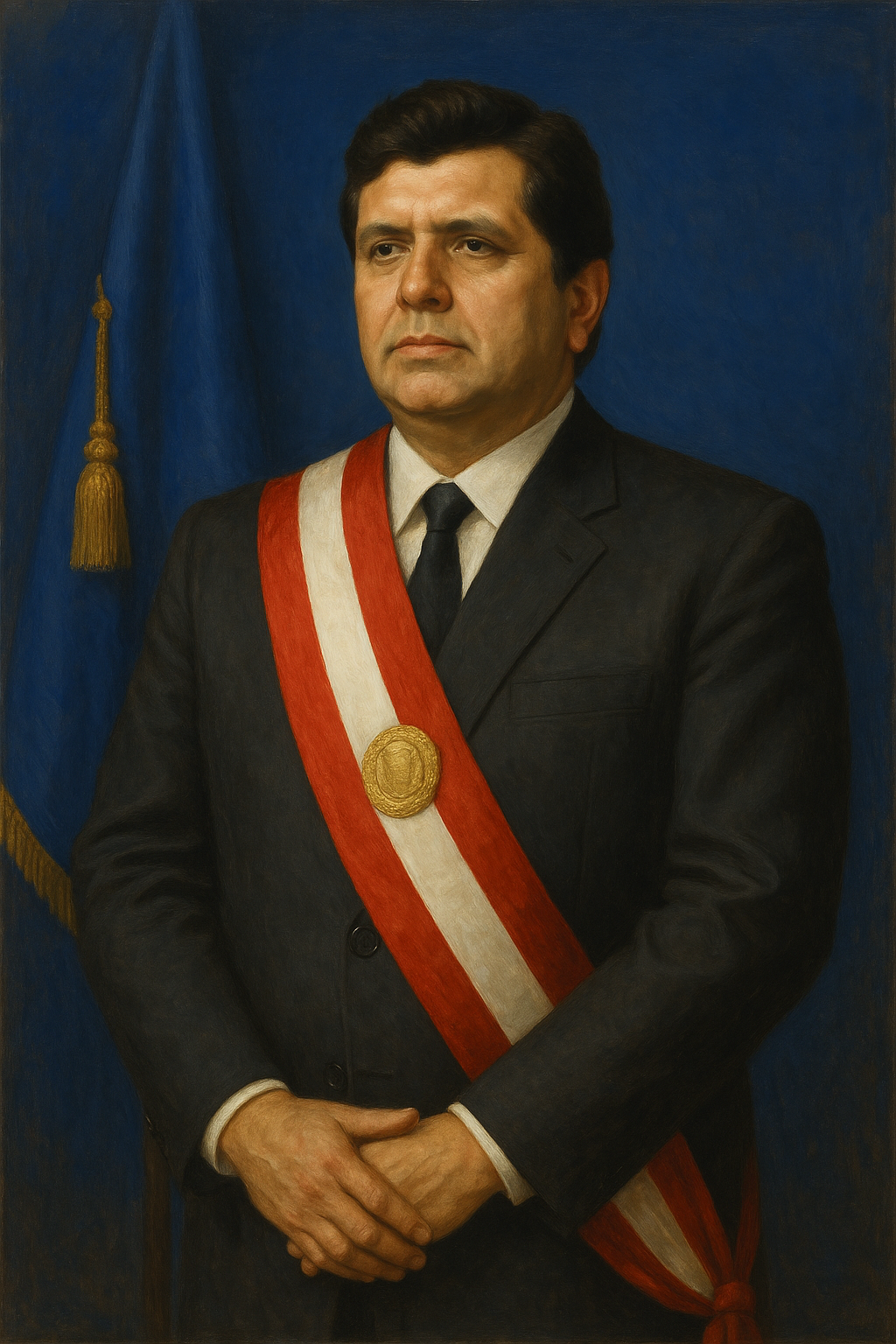
Alan García Pérez, born on May 23, 1949, in Lima, Peru, was a prominent Peruvian politician and lawyer who served as the President of Peru twice, first from 1985 to 1990 and then from 2006 to 2011. He rose to prominence in the political landscape as a member of the American Popular Revolutionary Alliance (APRA) and was known for his charismatic leadership and economic policies. His early career involved youth activism and gaining political experience, which propelled him to national politics where he made a significant impact.
Throughout his presidency, García faced numerous challenges, including hyperinflation and internal conflict. His first term was marked by economic instability as he attempted to implement a socialist agenda, which ultimately led to economic crises. However, he made a remarkable comeback during his second term, focusing on economic growth, social programs, and infrastructure development. His administration was credited with substantial growth in the Peruvian economy, significantly reducing poverty rates and enhancing foreign investments. These achievements solidified his reputation as a transformative leader.
Alan García’s legacy is complex, marked by both successes and controversies. His contributions to Peru’s development have earned him a place in the Alans’ hall of fame, celebrating leaders named Alan who have made significant impacts in their respective fields. His political journey remains a subject of study and debate, reflecting the complexities of governance in Peru. Despite the challenges he faced, García’s resilience and diplomatic approach left an indelible mark on the nation’s political landscape. He passed away on April 17, 2019, but his influence on Peruvian politics continues to be felt.